

Most collectors dream of rare coins, dramatic errors, and high-grade pieces sealed in slabs. Yet some of the most rewarding discoveries still come from an unexpected place—circulation. Everyday pocket change contains overlooked pieces with genuine value, historical significance, and strong collector demand. These finds require only sharp observation, a basic understanding of mint marks, and a willingness to inspect coins worth money that pass through your hands.

The Hidden Value of Circulating Coins
Circulating coins offer three compelling advantages:
- Free or low-cost entry into numismatics
- Realistic chances of finding forgotten or misidentified pieces
- A connection to history that feels immediate and personal
Social media often focuses on unrealistic “million-dollar penny” stories, but serious collectors know the real excitement comes from spotting subtle errors, unusual compositions, and key-date coins that slipped into circulation decades ago. Many valuable finds began as casual discoveries in drawers, jars, and spare-change bowls, casually and curiously checked via the coin scanner.
Key Factors That Make a Circulating Coin Worth Keeping
To filter out the noise and focus on quality, collectors should look for three primary markers:
- Authentic errors or varieties such as doubling, off-center striking, or misaligned dies
- Key dates with low mintages or strong historical interest
- Condition better than the average circulated example
Mint marks also play a crucial role. A single letter can shift a coin from common to scarce—especially in early 20th-century series.
Three High-Value Circulation Finds Every Collector Should Know
Some circulating discoveries stand out due to their combination of rarity, historical context, and strong demand:
- 1943 Bronze Lincoln Cent — An iconic wrong-planchet error. Genuine examples weigh 3.11 g, unlike steel cents around 2.7 g. These outliers have sold for upward of $100,000.
- 1969-S Doubled Die Obverse Cent — Strong doubling on LIBERTY and the date make this a top-tier penny variety. Even worn pieces can bring significant premiums.
- 1916-D Mercury Dime — Only 264,000 struck, making it one of the most coveted low-mintage issues in U.S. circulation history.
Coins like these remind collectors that extraordinary pieces can still appear in ordinary places when you don’t forget to use the free coin value app when your intuition asks for it.
Classic Circulating Coins Worth Spotting
Circulation discoveries are not limited to a single era. Some of the most respected U.S. rarities entered circulation more than a century ago, while others continue to surface in coin rolls pulled from banks today. Understanding which pieces deserve attention helps collectors separate meaningful finds from ordinary pocket change.
Several well-documented classics routinely appear on collectors’ wish lists because they combine scarcity, history, and strong resale value.
1. 1943 Bronze Lincoln Cent
This wrong-planchet error occurs when standard bronze blanks were accidentally mixed with wartime steel. Its tell-tale signs include:
- Weight of 3.11 g (not steel’s 2.7 g)
- Brown patina instead of zinc-coated silver tone
- Non-magnetic reaction
Only a handful survive, but stories of circulation finds continue to inspire collectors.
2. 1969-S Doubled Die Obverse Cent
The doubling on LIBERTY and the date is bold under magnification. Uncirculated examples reach five-figure prices, while circulated pieces still command hundreds. Many remain misidentified in household coin jars.
3. 1916-D Mercury Dime
With a mintage of only 264,000, this early Denver issue stands as a cornerstone key date. Even worn examples trade above $800. The small “D” mint mark near the fasces pole is often faint, so close inspection is necessary.
Additional Valuable Varieties Still in Circulation
| Coin | Key Trait | Typical Circulated Value |
| 1943 Bronze Cent | Wrong planchet | $10,000+ |
| 1969-S DDO Cent | Strong obverse doubling | $100+ (worn) |
| 1916-D Mercury Dime | Low Denver mintage | $800+ |
| 1955 Doubled Die Cent | Heavy rim doubling | $1,000+ |
| 1965 No-S Proof Dime | Missing mint mark | $500+ (worn) |
Each of these is scarce, but not impossible to encounter, especially when reviewing old inherited collections, roll hunting, or checking estate sale lots.
Modern Errors Still Entering Circulation
Even contemporary coins produce surprises. Examples include:
- 1983 no-mintmark cents occasionally selling for strong premiums
- 1972 doubled die cents, a favorite starter variety
- State quarters with off-center strikes or clipped planchets
Modern errors make circulation hunting exciting for beginners because they offer accessible entry points under $100.
Pocket change can still deliver genuine value—as long as you know what to look for.
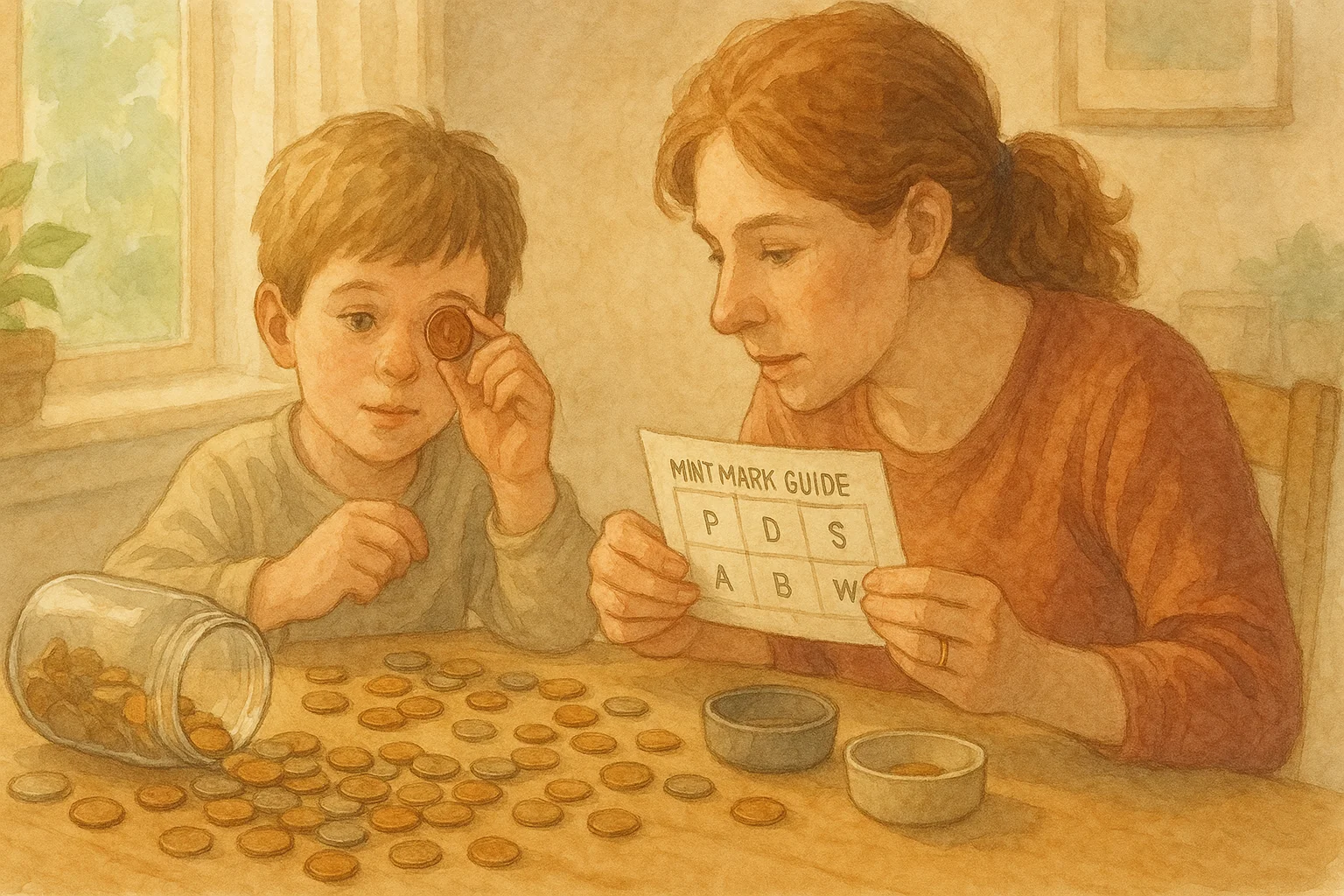
Verify Every Suspicious Coin Before Adding It to Your Collection
Finding a potentially valuable coin in circulation is only the first step. Proper verification and careful handling determine whether the discovery holds real value over time. A small amount of structure prevents accidental damage and helps collectors separate genuine rarities from common coins that only appear unusual at first glance.
Circulating coins often show wear, discoloration, or strike deformities caused by normal use. These can imitate true varieties. Before assuming a coin is rare, run a basic verification checklist:
- Weigh the coin using a pocket digital scale
- Measure diameter and thickness with a caliper
- Check magnetism for steel vs. bronze wartime cents
- Photograph details under angled light to spot doubling
- Compare with verified reference images from PCGS or CoinWeek
Digital tools can strengthen this process. The Coin ID Scanner app allows quick photo identification through either in-app camera shots or gallery uploads. It provides mint year, composition, diameter, weight, and market ranges for more than 187,000 coins, making it easier to confirm authenticity before setting a coin aside. The app helps catch wrong-planchet errors, mis-struck pieces, and unusual metals far more reliably than memory alone.
Store Circulation Finds Properly to Protect Their Condition
Storage affects long-term value, especially for copper and silver pieces. Recommended practices include:
- Using 2×2 cardboard flips or Mylar holders
- Avoiding PVC-filled holders that create green residue
- Keeping coins in a dry, temperature-stable drawer or box
- Labeling each holder with date, variety, and purchase or discovery notes
Even circulated coins benefit from structured handling. A simple system prevents scratches, fingerprints, or misplaced finds.
Building a Collection Strategy Around Circulation Finds
Circulation searchers often use two approaches:
- Typeset method — keeping one strong example of each significant error or key date
- Roll-hunting progression — tracking upgrades and replacing worn coins with sharper pieces
The Coin ID Scanner app’s digital collection management tools, premium AI Helper, and smart filters support both strategies. These features help prioritize which discoveries deserve a permanent spot and which should be traded or sold.
A Practical Path to Long-Term Value
Circulation finds offer excitement, affordability, and the genuine possibility of uncovering historic pieces hiding in plain sight. With smart verification, careful storage, and consistent organization, everyday coins can evolve into a collection that grows in both depth and value.